
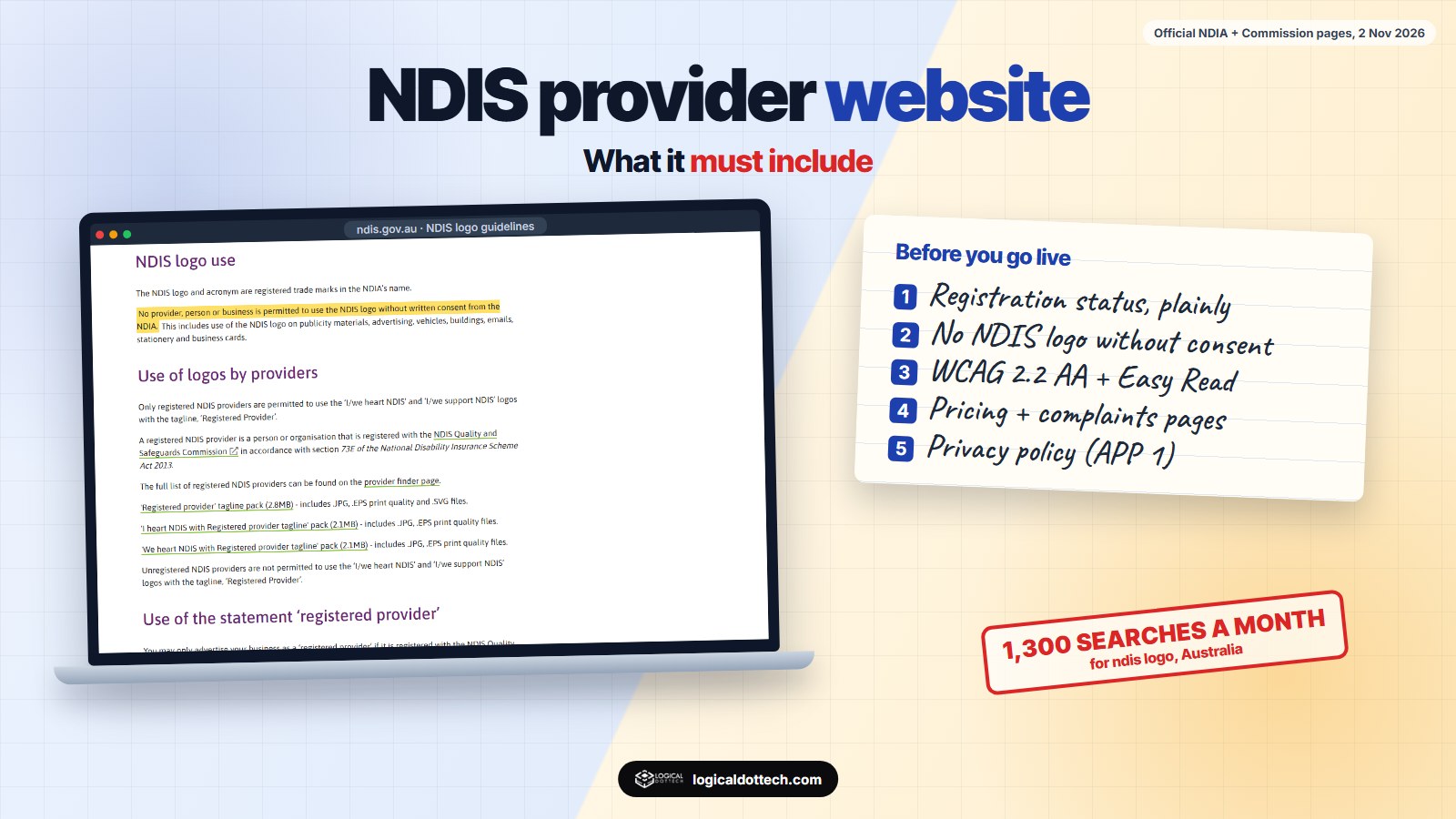
Short answer: An NDIS provider website needs to say what you do, where you work, whether you are registered with the NDIS Quality and Safeguards Commission, how to make a referral, how you charge, how to complain, and how you handle personal information. Build it to WCAG 2.2 Level AA, as the Australian Human Rights Commission recommends. Leave out the NDIS logo (it needs written NDIA consent), any “registered provider” claim if you are not registered, and phrases like “NDIS approved” or “100% NDIS funded”.
We have a team in Woodville Park, Adelaide, and build websites for Australian service businesses. NDIS providers face rules most businesses never see, and an audience that includes people using screen readers and Easy Read. On 2 November 2026 we read the official NDIA, NDIS Commission, Human Rights Commission, OAIC and ACCC pages and pulled Australian search data. This is the checklist we would use for any NDIS website design job.
What do participants check before they contact a provider?
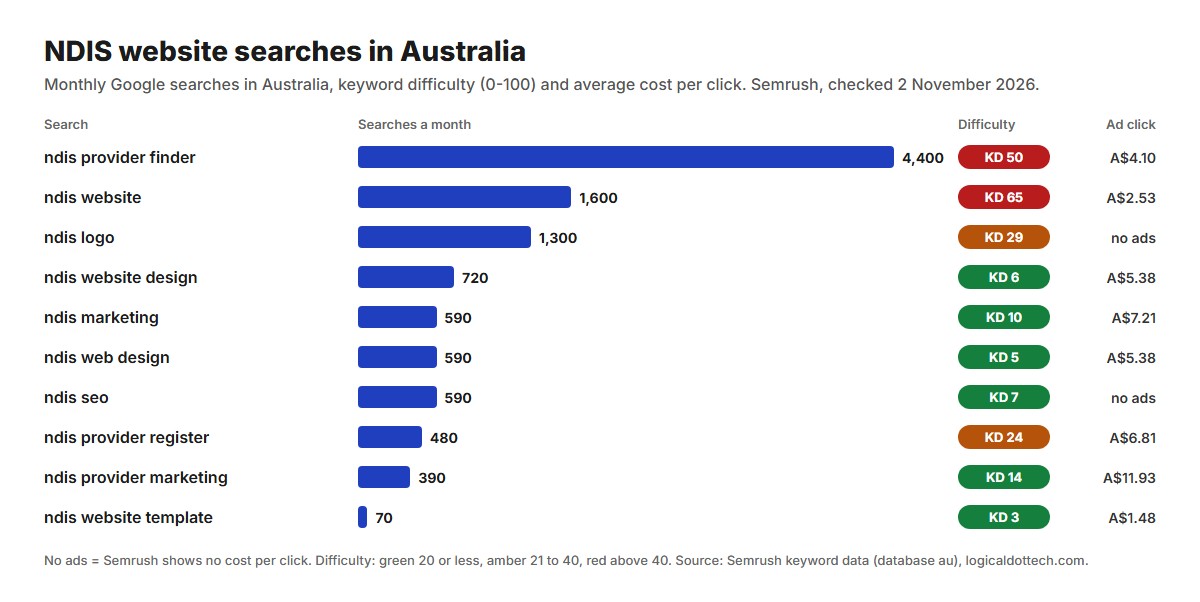
The top search in our check is “ndis provider finder”, at about 4,400 searches a month, and “ndis provider register” adds another 480. Together that is about 4,880 searches a month from people looking providers up in official lists (our arithmetic, adding two Semrush figures). The NDIA’s own guide for participants says the provider finder shows a registered provider’s website details, phone number, email and suburb. Your website has to confirm what the finder says.
One number surprised us: “ndis logo” gets about 1,300 searches a month, yet the NDIA says nobody may use the NDIS logo without written consent.
Registered or unregistered: what must your website say?
The NDIS Commission says a registered NDIS provider has been audited against the NDIS Practice Standards, passed a suitability assessment and holds a certificate of registration. They are listed on the searchable NDIS Provider Register.
Unregistered providers can deliver many supports, but only participants who self-manage or plan-manage their funding can choose them. Registration is required for specialist disability accommodation, specialist behaviour support, plan management and supports for participants with NDIA-managed funding. From 1 July 2026, supported independent living (SIL) and NDIS digital platform providers must also be registered, with transitional arrangements for providers who applied before 1 October 2026.
State your status in one plain sentence on the home page and About page:
- If you are registered: give your registration number and groups, and link to the Commission’s provider search.
- If you are not registered: say so, and that you work with self-managed and plan-managed participants.
- If you are a SIL or platform provider in transition: describe your status the way the Commission does.
Can you use the NDIS logo or the word “NDIS”?
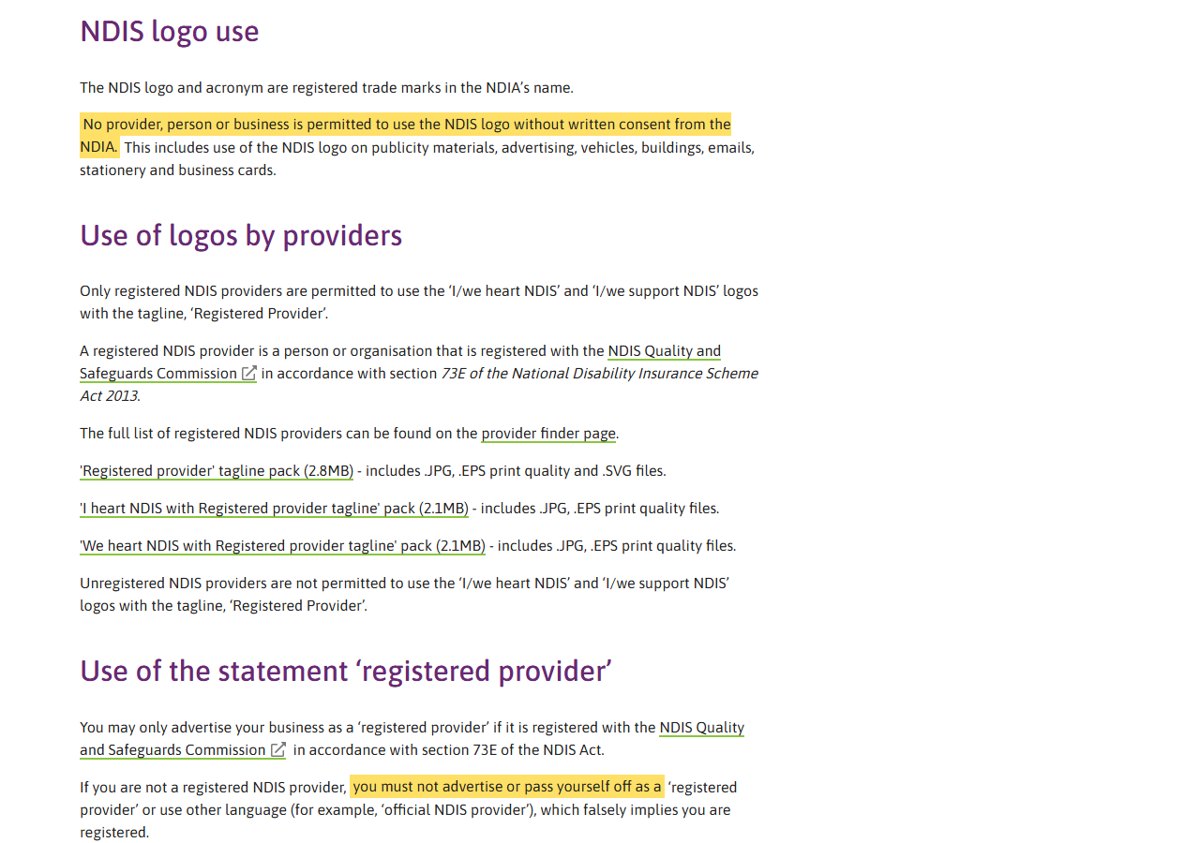
The NDIA’s NDIS logo guidelines say:
- The NDIS logo needs written NDIA consent. That covers advertising and publicity materials, so we treat a website the same way.
- Registered providers may use the “I/we heart NDIS” and “I/we support NDIS” logos with the “Registered Provider” tagline. Unregistered providers may not.
- Only registered providers may advertise as a “registered provider”. Wording such as “official NDIS provider” that falsely suggests registration is also out.
- No false affiliation. The NDIA gives the NDIS acronym in business names, trading names or domain names, and product names like “NDIS packages” or “NDIS bundles”, as examples of misleading statements of affiliation.
- No funding promises. Avoid “NDIS approved” and “100% NDIS funded”, and do not imply that NDIS funding is “guaranteed”.
The NDIA says it sends cease-and-desist letters for misuse and reports possible Australian Consumer Law breaches to the ACCC.
Which pages does an NDIS provider website need?
| Page | What goes on it | Why |
|---|---|---|
| Home | What you do, where, registration status, phone and a referral button. | Confirms what the finder says. |
| Services (one page each) | Each support in plain words: who it is for, what a visit looks like, how often. | People search for specific supports. |
| Service areas | Suburbs and regions you really cover, and whether you travel. | Saves calls from people you cannot serve. |
| Registration | Status, registration number and groups, with a link to the Commission’s register. | Lets people check you themselves. |
| Referrals and availability | A short referral form and current waitlist or start times. | Families want to know when you can start. |
| Pricing | How you charge, and a link to the official NDIS pricing page. | Price limits and fair pricing rules apply. |
| Feedback and complaints | How to complain to you (including anonymously) and to the NDIS Commission. | The Commission expects this to be easy and safe. |
| Privacy | Your privacy policy under the Australian Privacy Principles. | You will collect personal and often health information. |
| Accessibility | Your standard, Easy Read files, how to ask for another format. | Your readers include people with disability. |
How should an NDIS provider show prices?
The NDIA’s pricing arrangements page says the Minister’s pricing determination sets maximum prices for 2026-27, in pricing schedules effective 24 September 2026. The page says those maximum prices only apply to NDIA-managed and plan-managed participants, and that providers cannot charge more than the maximum price limits. The 2025-26 Pricing Arrangements and Price Limits are still on the page, with updated guidance to follow.
The NDIS Code of Conduct adds a fair pricing rule: do not charge or represent higher prices for NDIS participants without a reasonable justification. Our advice: explain how you charge (per hour, per visit, travel) and link to the official page instead of typing numbers that go out of date.
What should the complaints page say?
The NDIS Commission says all NDIS providers are expected to have effective complaints practices, and registered providers must have a documented complaints management and resolution system. It lists the ability to submit complaints anonymously, accessible platforms and languages, and telling participants how to complain to you or to the NDIS Commission. It also says threatening someone, or trying to stop them complaining, is against the law.
So: a complaints page one click from every page, a form that does not require a name, an Easy Read version, and the Commission’s Contact Centre, 1800 035 544, as listed on its report page.
How accessible does the website need to be?
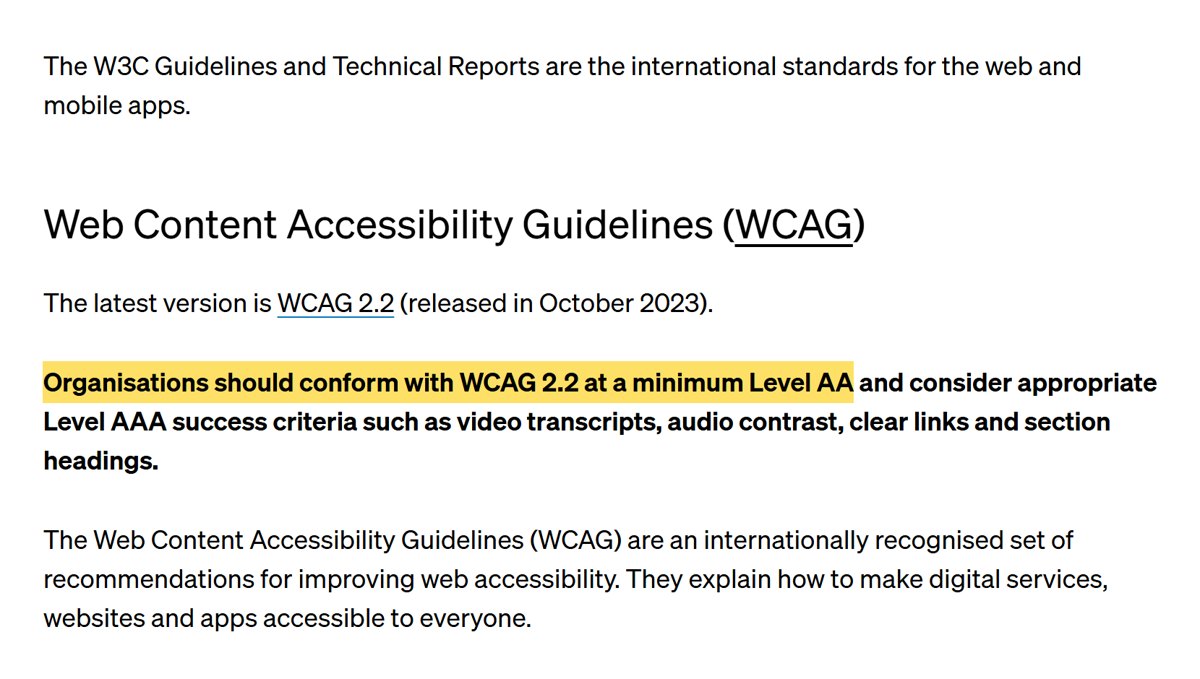
The Australian Human Rights Commission’s guidelines on equal access to digital goods and services say organisations should conform with WCAG 2.2 at a minimum Level AA. They are not legally binding and are read with the Disability Discrimination Act. For a provider whose customers are people with disability, we see no reason to aim lower.
Here is the checklist we use, with the WCAG 2.2 rule behind each line:
Do these
- Text contrast of at least 4.5:1 (1.4.3, AA).
- Everything works with a keyboard alone (2.1.1, A), with a visible focus outline (2.4.7, AA).
- Buttons and links at least 24 by 24 CSS pixels, or spaced apart (2.5.8, AA, new in 2.2).
- Alt text on photos that carry meaning (1.1.1, A) and captions on every video (1.2.2, A).
- Help, such as your phone number, in the same place on every page (3.2.6, A, new in 2.2).
- Referral forms that do not ask for the same details twice (3.3.7, A, new in 2.2).
- Plain English, short sentences, and an Easy Read version of the main pages.
Avoid these
✗ Accessibility overlay widgets used instead of fixing the site itself.
✗ Text inside images, such as service lists made in Canva.
✗ Light grey text, or text over busy photos.
✗ Auto-playing sliders and videos.
✗ PDF-only service guides.
What does the privacy notice need?
The OAIC says a small business (annual turnover of $3 million or less) is usually exempt, but that the Privacy Act covers a health service provider regardless of turnover. It defines a health service provider as one that provides services in relation to physical, emotional, psychological and mental health. Many NDIS supports may fit, so check your position with the OAIC or a lawyer.
Under APP 1, a privacy policy must cover the kinds of personal information you collect and hold, how you collect and hold it, why you use and disclose it, how people can access and correct it, how to complain about a privacy breach, and whether you send information overseas. If your referral form sends data to an overseas service, say so.
What should an NDIS provider website not do?
We found no NDIS rule against testimonials in the pages we read. The ACCC’s online reviews guidance applies: fake or misleading reviews are against the law, including undisclosed reviews from family or staff, edited reviews and hidden negative ones. Our own rules for NDIS marketing on your site:
- Written consent before publishing any participant’s name, photo, story or diagnosis, and a way to withdraw it.
- No pressure: no “only 2 spots left” banners unless it is true today, and no countdown timers.
- No promises about funding, plan reviews or outcomes. The NDIA warns against implying funding is “guaranteed”.
- No stock photos that pretend to be your staff or participants.
The Code of Conduct asks all providers to act with integrity, honesty and transparency.
How we build NDIS provider websites
Our Woodville Park team would build your site to the checklist above and test every page with a keyboard and a screen reader before launch. Fixing an existing site? Our website redesign checklist covers the technical side. See our web development service and Australian website and SEO page, message us on WhatsApp on 0494 866 992, or book a free 30-minute call.
Common questions
Can an NDIS provider use the NDIS logo on its website?
Not without written consent from the NDIA. Registered providers may use the “I/we heart NDIS” and “I/we support NDIS” logos with the “Registered Provider” tagline. Unregistered providers may not.
Can an unregistered provider say “NDIS provider” on its website?
It must not call itself a “registered provider” or use words like “official NDIS provider”. Say plainly that you are not registered and that you work with self-managed and plan-managed participants, the only participants who can choose unregistered providers.
Does an NDIS provider website have to meet WCAG?
The Australian Human Rights Commission says organisations should conform with WCAG 2.2 at a minimum Level AA. Its guidelines are not legally binding but are read with the Disability Discrimination Act. We treat WCAG 2.2 AA as the minimum.
Should I put my prices on my NDIS website?
Explain how you charge and link to the official NDIS pricing page. Maximum prices apply to NDIA-managed and plan-managed participants, and the Code of Conduct bars higher prices for participants without a reasonable justification.
Can I put participant testimonials on my NDIS website?
We found no NDIS rule against them in the pages we read. The ACCC says fake or misleading reviews are against the law. Get written consent before using a participant’s name, photo or story.
Can I use “NDIS” in my business name or domain name?
The NDIA lists the NDIS acronym in business names, trading names or domain names as an example of a misleading statement of affiliation. If yours already has it, get legal advice.
Data: our own Semrush keyword check for Australia (database au), 12 NDIS searches, 2 November 2026. Search numbers are monthly averages and estimates. Sources read 2 November 2026: NDIA (logo guidelines, choosing a provider, pricing); NDIS Commission (registration, mandatory registration, register, Code of Conduct, complaints); Australian Human Rights Commission; W3C WCAG 2.2; OAIC (small business, APPs); ACCC. NDIS rules are changing under new legislation, so check the official pages. This is general information, not legal advice.